What is Intarsia Woodworking?
Intarsia grew as an art form from ancient Egyptian mosaic traditions, passing through Byzantium to Italy, where it was kept alive by artisan monks throughout the medieval period, beautifying woods and giving expression to the finest qualities of the tree.
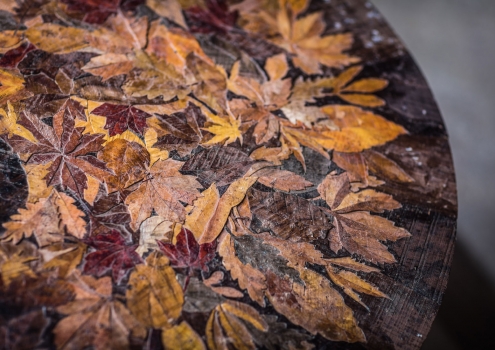
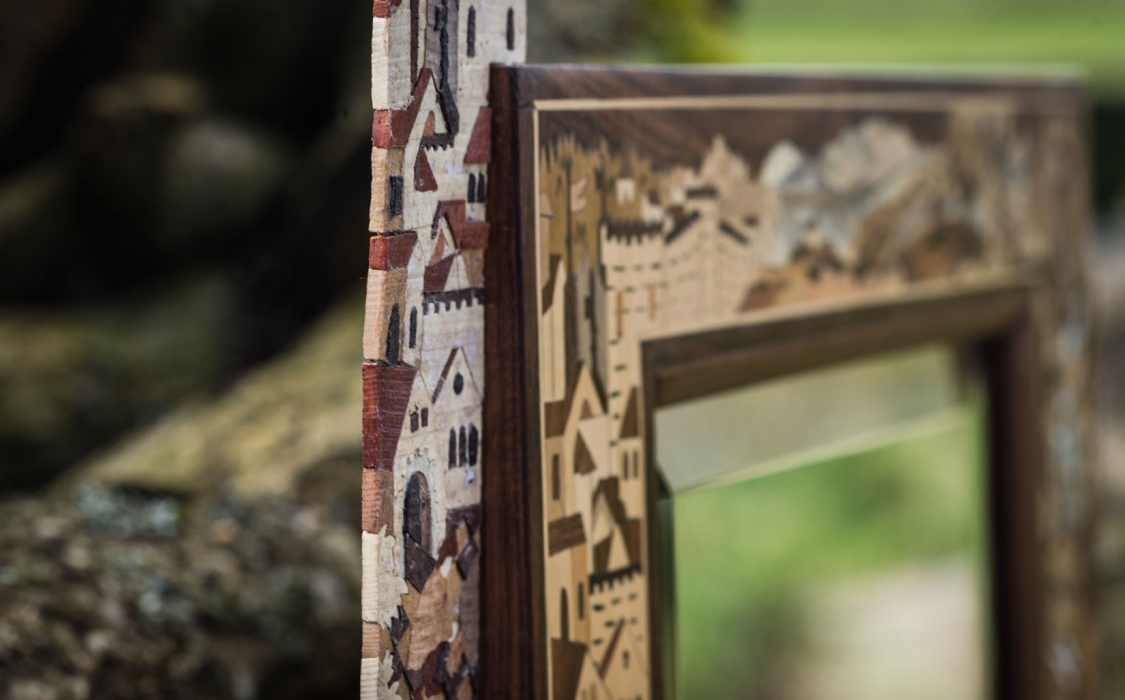
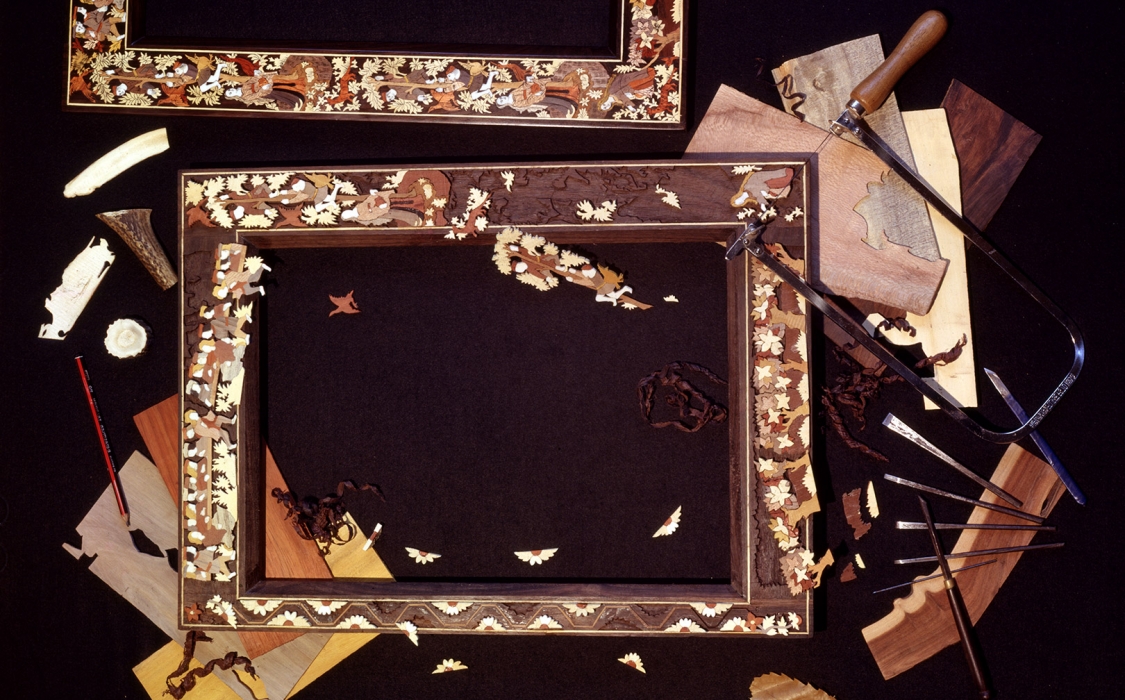
The ancient wood art of Intarsia involves the careful selection of precisely-shaped pieces of wood, assembled to create an intricate artistic design.
Marquetry uses thinner woods or veneers, cut with a scalpel or knife, whereas Intarsia technique more resembles that of making a jigsaw, making individual cuts by fretsaw in contrast to a knife and from substantially thicker woods.
The woods used in Intarsia are approximately 3mm thick and inlaid into a solid wooden base, or overlaid onto a flat wooden surface. The use of rosewood as a background gives a sharp contrast to the natural colours of the inlaid woods.
Alardus designs represent a modern interpretation of a traditional skill and much care and attention ensures a finish of great quality and durability.
A Short History of Intarsia
The ancient Egyptians, familiar with the earliest decorative forms of mosaic, also used their skills in veneering techniques and decorated their furniture with mosaic patterns – parquetry (herringbone patterns).
These mosaic arts progressed through Byzantium and were kept alive in northern Italy throughout medieval times. With the development of a new technique, known as the shoulder knife, the artisan monks broke away from mosaic art forms, now able to create simple flower motifs by gouging out the solid base to accommodate the cut pieces chiselled from ¼ inch / 3mm thick wood. This marked the birth of Intarsia or wood inlay.
The next major development came when the first fretsaw was invented during the 1500s. These fine saws were cut from clock spring steel. These new saws freed the design outline from the limitations hitherto imposed by the chisel and shoulder knife, enabling the design to be cut and assembled in jigsaw fashion and overlaid with glue to completely cover the surface or base instead of being inlaid.
At about the same time the first water-powered sawmill (in Germany) enabled logs to be sawn to a thickness of one-eighth of an inch (3mm) which later became better known as Victorian veneers. During the 1700s came the donkey or French horse, a method of cutting multiple veneers simultaneously. This resulted in a great spread in the popularity of the craft.
In the 18th Century the Dutch adopted these skills and applied the woods to a new standard of excellence in decorating their furniture. As seafaring merchant adventurers, they brought back new exotic woods which were used.
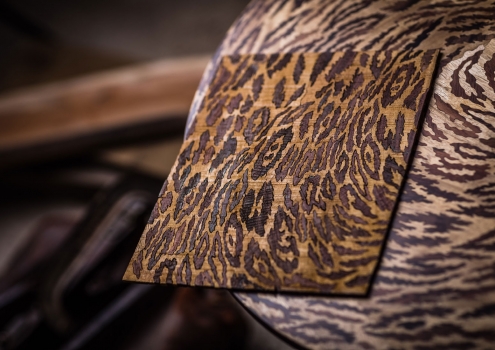
The variety of woods used display their distinctive natural colour and grain, no dyes are used. Fine engraving is used to highlight detail and enhance design.
Rosewood, dalbergia latifolia: dark purplish red-brown
Teak: golden brown/yellowish
Lacewood or London Plane: speckled on silvery brown
Rubber wood: light to dark grey with black streakes
Padauk: orange to red
Walnut regia: soft brown with contrasting darker streaks
Fig and Boxwood: pale cream, white
Ebony: dark to jet black
Tamarind: soft streaked grey
Jelutong and Jackfruit: deep yellow
Champa: Dark brown/olive colored
Blue Ash: grey, blue
Satinwood: golden yellow
Almondwood: reddish, yellow
Staghorn: pure white, used for faces and hands

For all your enquiries please contact
Alardus van den Bosch
Somerset
UK
If you would like to telephone please contact:
Alardus on +44 (0)1749 860450
If you would like to email please contact:
Alardus on vdb@alardus.co.uk
Copyright © 2004-2026 Alardus van den Bosch - All Rights Reserved