What is Marquetry?
Marquetry, a refined woodworking technique, involves the meticulous assembly of thin pieces of wood veneer to create intricate and beautiful designs. This art form, similar yet distinct from Intarsia, requires precision and a keen eye for detail. Each veneer, carefully selected for its colour and grain, is cut and fit together like a puzzle, forming patterns and pictures that transform wooden surfaces into works of art.
The process begins with a detailed design, often sketched or printed on paper, which serves as a template. Veneers are then cut using a sharp scalpel or knife, following the lines of the design with exacting accuracy. The thinness of the veneers, typically less than 3mm, allows for delicate and intricate patterns that would be difficult to achieve with thicker wood pieces.
Adhering to a solid base, the veneers are painstakingly assembled. The craftsman must ensure each piece fits perfectly, a task that demands patience and a steady hand. The resulting surface is then sanded and polished, revealing the seamless integration of the various veneers and the stunning complexity of the design.
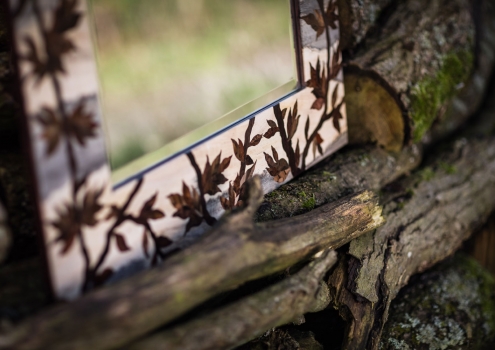
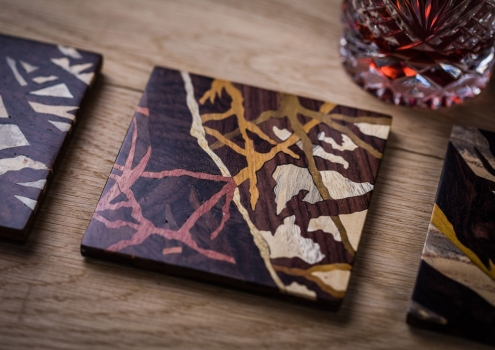
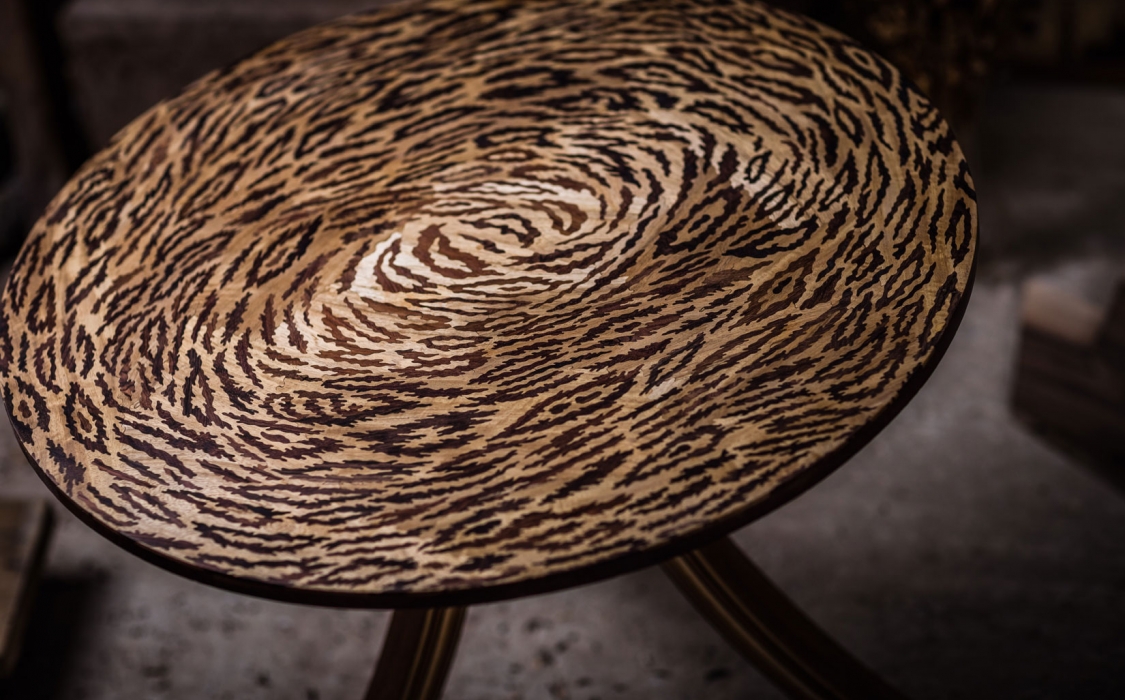
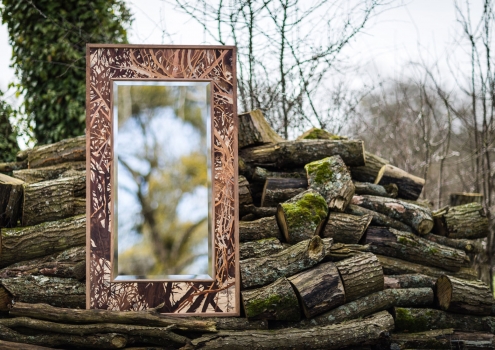
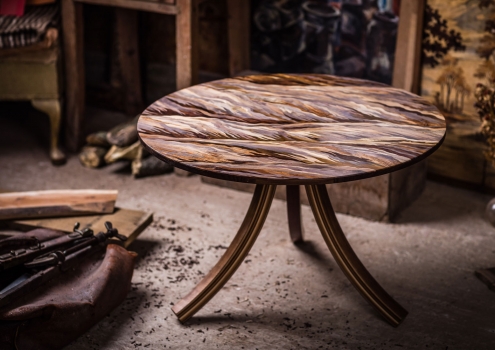
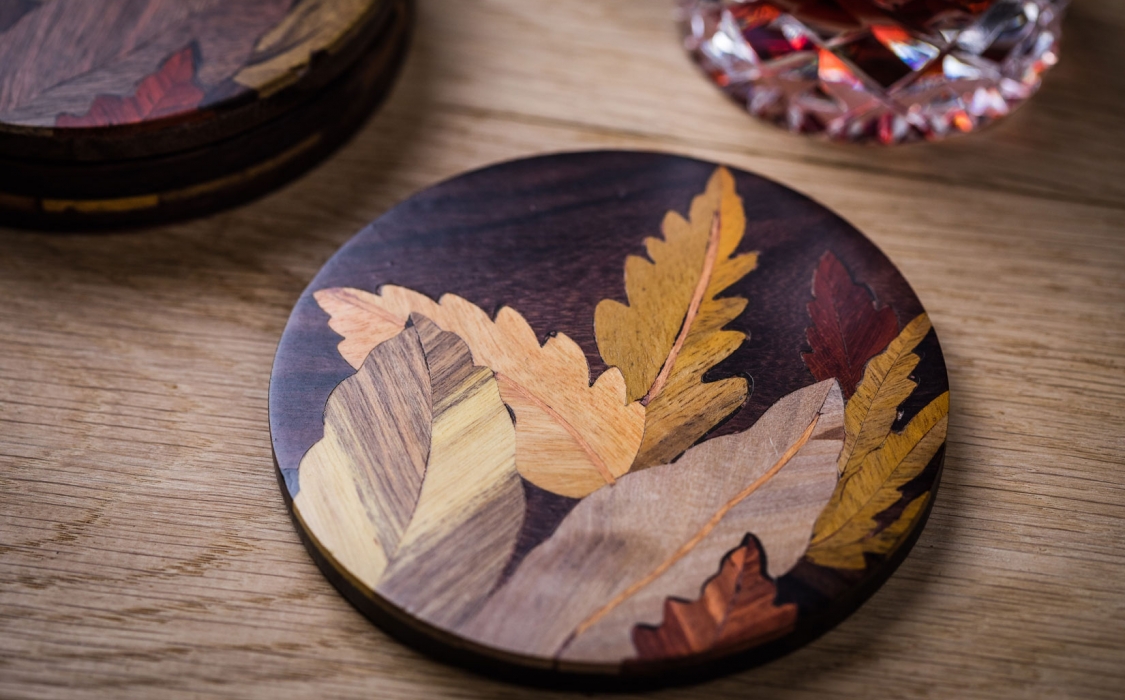
Marquetry is celebrated for its versatility. It can be applied to a variety of surfaces, from furniture and decorative panels to musical instruments and jewelry boxes. Marquetry is used for many different items including marquetry mirrors, marquetry coffee tables and marquetry coasters. The choice of wood is crucial, with exotic and richly colored woods often favored for their visual impact. Each type of wood brings its unique hue and texture, contributing to the overall harmony of the piece.
The magic of marquetry lies in its ability to bring out the natural beauty of wood, using its inherent qualities to create visual masterpieces. Through skillful arrangement and meticulous craftsmanship, marquetry transforms ordinary objects into extraordinary pieces that captivate and inspire.
A Short History of Marquetry
The origins of marquetry can be traced back to ancient civilisations, where early forms of the technique were used to adorn furniture and architectural elements. The Egyptians, known for their advanced woodworking skills, decorated their tombs and palaces with intricate inlays of wood and other materials, laying the groundwork for future generations.
Marquetry saw significant development during the Renaissance period, particularly in Italy and France. Artisans in these regions perfected the technique, using it to embellish furniture and interiors of the wealthy and powerful. The intricate designs often depicted scenes from nature, mythology, and daily life, showcasing the high level of skill and artistry involved.
In the 17th and 18th centuries, marquetry reached new heights in France under the patronage of Louis XIV. The Palace of Versailles, with its opulent interiors, is a testament to the grandeur of marquetry during this era. French craftsmen, known as ébénistes, became renowned for their exquisite marquetry work, blending wood with other materials such as metal, ivory, and mother-of-pearl.
The craft spread throughout Europe, with each region developing its own unique style. In England, marquetry became popular during the reign of Queen Anne, characterised by the use of floral motifs and fine detailing. Dutch marquetry, on the other hand, often featured elaborate scenes with a high degree of realism, reflecting the artistic trends of the time.
Marquetry continued to evolve in the 19th and 20th centuries, adapting to changing tastes and technological advancements. The introduction of powered cutting tools allowed for greater precision and complexity in designs, while the Arts and Crafts movement revived interest in traditional handcraft techniques, including marquetry.
Today, marquetry remains a revered art form, celebrated for its beauty and craftsmanship. Contemporary artists and craftsmen continue to push the boundaries, exploring new techniques and materials while honoring the rich heritage of this ancient craft. The timeless appeal of marquetry lies in its ability to transform simple wood into a canvas of limitless possibilities, capturing the imagination and admiration of all who behold it.
For all your enquiries please contact
Alardus van den Bosch
Somerset
UK
If you would like to telephone please contact:
Alardus on +44 (0)1749 860450
If you would like to email please contact:
Alardus on vdb@alardus.co.uk
Copyright © 2004-2026 Alardus van den Bosch - All Rights Reserved